25 Breathtaking Places to Go in Nepal You Won’t Believe Exist
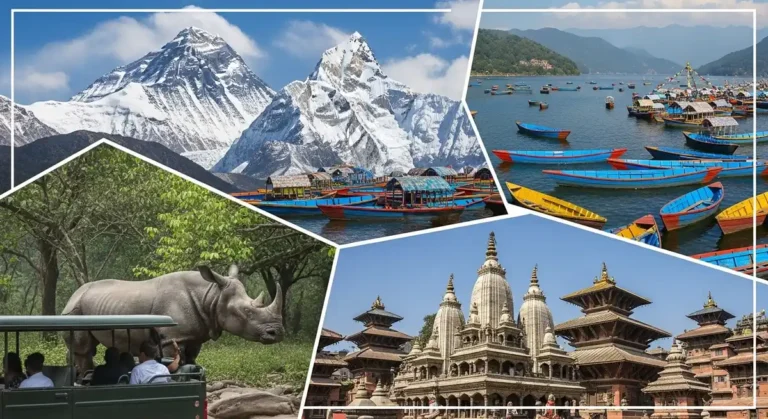
Nepal is a land-locked country in South Asia, famous for the Himalayan landscapes, Mount Everest, and rich cultural experiences.
From trekking the Annapurna Circuit to exploring Kathmandu and Lumbini, the birthplace of Buddha, Nepal offers adventure, wildlife, and unforgettable travel highlights.
The Himalayan landscapes of Nepal are full of beauty and adventure. The mountains, including the world’s highest peaks like Mount Everest, attract hikers, climbers, and lovers of nature.
Whether you go on short hikes, long treks, or try mountaineering, every step brings a wonderful experience.
Trails such as the Everest Base Camp, Annapurna Circuit, and Poon Hill are loved by many travellers who find the journey almost like a nirvana.
Beyond the trails, Nepal is alive with cultural highlights. In Kathmandu, you can wander through lively streets and ancient royal cities.
In Lumbini, the birthplace of Buddha, peace fills the air. For thrill-seekers, there are sports like rafting, high rope swings, and exciting adventures.
Nature lovers can enjoy wildlife safaris in Chitwan National Park, where tigers and other animals roam the plains.
Friendly locals share warm experiences and helpful travel tips, making this country truly magical for every visitor.
Top 25 Places to Go in Nepal
Kathmandu Valley
1. Kathmandu – Durbar Square, Thamel, Pashupatinath, Swayambhunath
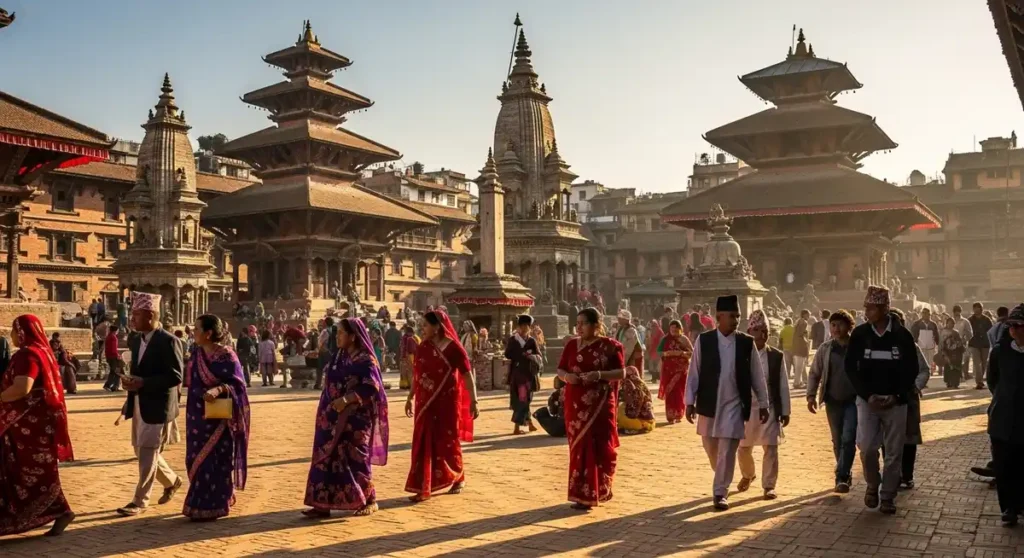
Kathmandu is the vibrant capital city of Nepal, known for its rich culture, ancient Durbar Squares, sacred Hindu temples like Pashupatinath Temple, and Buddhist stupas such as Swayambhunath, also called the Monkey Temple.
Visitors can explore the lively streets of Thamel, taste unique cuisines, shop for handicrafts and trekking gear, and enjoy the history of the Kathmandu Valley with landmarks like Kathmandu Durbar Square, a UNESCO World Heritage Site.
Walking through Kathmandu is like stepping into a living museum of culture and tradition. The city’s heart, Kathmandu Durbar Square, shines with history and is proudly a UNESCO World Heritage Site.
Around it, the tall Hindu temples with their gold-topped roof, peaceful funeral pyres, and sacred Buddhist stupas such as Swayambhunath—the Monkey Temple—create an atmosphere full of devotion and wonder.
Beyond the temples, the colourful life of the city unfolds. In Thamel, alleyways are filled with shops, warm restaurants, cosy cafes, and cheerful bars where music and chatter carry into the night.
At Potter’s Square, you can see handmade bricks, crockery, and soft yak wool blankets. The busy bazaars like Asan Tole are perfect for finding handicrafts, sparkling jewellery, and sturdy trekking gear.
The Kathmandu Valley is also a place for art and learning. At the RN Joshi Museum of Modern Art and other art museums, creativity thrives.
Meanwhile, the many food stalls and eateries let travellers taste a variety of cuisines that make every day a new delight.
With its Durbar Squares, rich heritage of the Newaris, and endless places to explore, Kathmandu is a city that inspires joy and discovery.
2. Bhaktapur – Nyatapola Temple, Pottery Square
Bhaktapur is a historic place in the Kathmandu Valley of Nepal. It is known for its medieval charm, beautiful temples, traditional pottery, and rich Newar culture.
Visitors enjoy the authentic heritage, red-brick houses, and the timeless work of local artisans.
In the heart of the Valley, Bhaktapur, also called Bhadgaon, or Khwopa, shines as the “City of Devotees.”
Its history goes back to the 12th century during the Licchavi and Malla Dynasty. Old chronicles like the Vamshavali mention its role as a capital and a powerful settlement.
Because it was part of the India–Tibet trade, the city enjoyed great wealth and left behind a remarkable heritage.
As I walked along the Arniko Highway from Kathmandu and Lalitpur, I entered a world of authentic beauty.
The brick houses, carved wood, and pottery squares filled with artisans made me feel close to its tradition.
The temples, including the grand Nyatapola, reflect the culture, language, and cuisine of the Newar people. Today, tourists and visitors still find its charm irresistible.
Even though times have changed, projects like the Bhaktapur Development Project with support from West Germany brought thoughtful aid and careful development.
The city continues to grow while keeping its authentic medieval spirit alive. This mix of history, period beauty, and living tradition makes Bhaktapur one of Nepal’s brightest cultural jewels.
3. Patan (Lalitpur) – Patan Durbar Square, Krishna Mandir
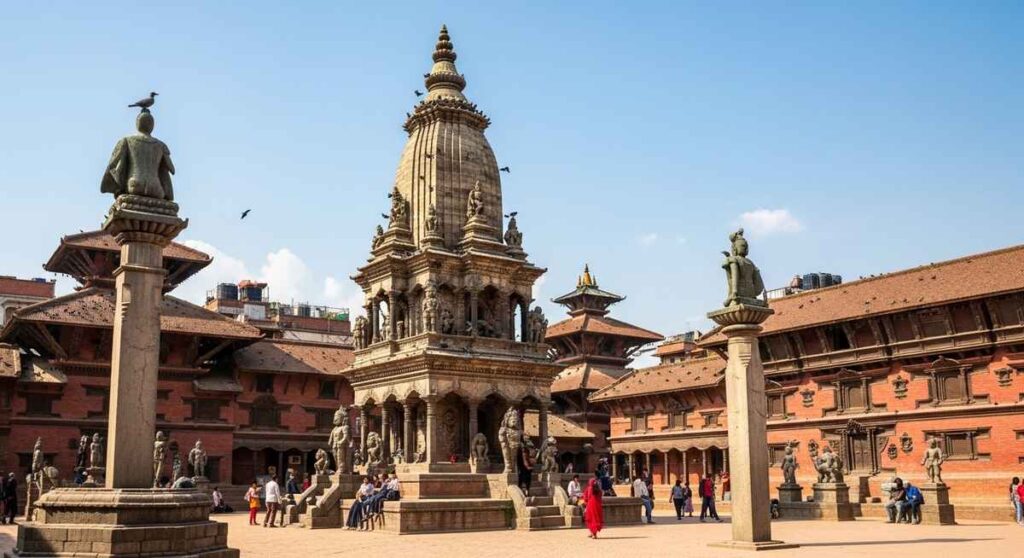
Patan (Lalitpur) is a famous UNESCO World Heritage Site in the Kathmandu Valley of Nepal. It is known for its Newari architecture, Hindu temples, Buddhist monasteries, and the stunning Krishna Temple, built in 1637 by King Siddhi Narsing Malla.
The temple shines with gilded spires, stone carvings, and sacred tales from the Ramayana and Mahabharata, making it one of the most celebrated cultural treasures in the City of Beauty, Lalitpur.
Walking through Patan in Lalitpur, also called the City of Beauty, feels like entering a living museum of arts and crafts.
This artistic city is home to master artisans and craftsmen who still practice traditional methods like repoussé and lost wax to create fine sculptures and statuettes.
Narrow streets lined with brick houses, grand Hindu temples, peaceful Buddhist monasteries, and sacred vihars show the timeless religious harmony of Hinduism and Buddhism.
At the heart of the valley, Patan Durbar Square is a palace complex of the Malla kings, now a UNESCO World Heritage Site.
The square dazzles with elegant pagoda temples, ornate courtyards, and stunning Newari architecture.
In Keshav Narayan Chowk, a bronze artifact museum preserves ancient beauty, while Sundari Chowk with the celebrated Tusha Hiti is filled with rich woodcarvings, stone, and metal sculptures.
The jewel of the square is the Krishna Temple, built in 1637 in Shikhara-style architecture. With gilded spires and detailed carvings, it is the first of its kind in Nepal.
The temple is linked with the story of King Siddhi Narsing Malla, who dreamt of Krishna and Radha and built this marvel in their honor.
Inside its three floors, devotees find shrines to Krishna, Shiva with his linga, and Lokeshwor, while the walls display stories from the Ramayana and Mahabharata in Newari script.
Surrounding it are statues of Vishnu, Garuda, and divine avatars, along with delicate bas-reliefs, cornices, and a tall freestanding statue of Garuda on a pole.
Today, Krishna Mandir stands as a shining part of the cultural heritage of Nepal. With its festivities, fests, and feasts, it draws countless pilgrims and tourists each year.
Set in the Kathmandu Valley, on the high plateaus of central Nepal at 1,350 metres (4,430 feet), this metropolitan city of over 299,843 inhabitants (as recorded in the 2021 census, across 77,159 households) celebrates its multi-ethnic traditions with pride.
The city’s lavish temples, grand palaces, and rich metalwork continue to honor its identity as a place of timeless beauty and living history.
4. Boudhanath Stupa – Tibetan Buddhist culture
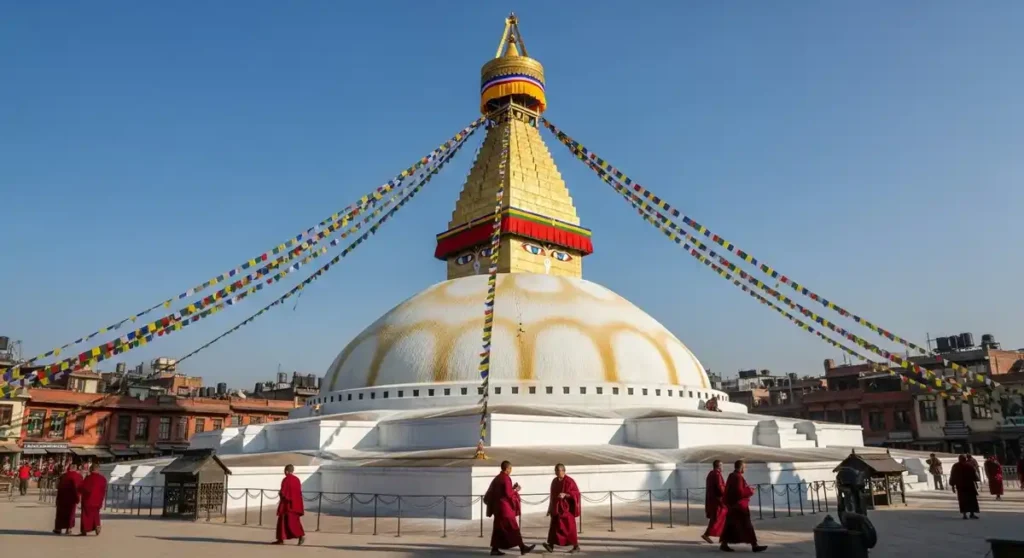
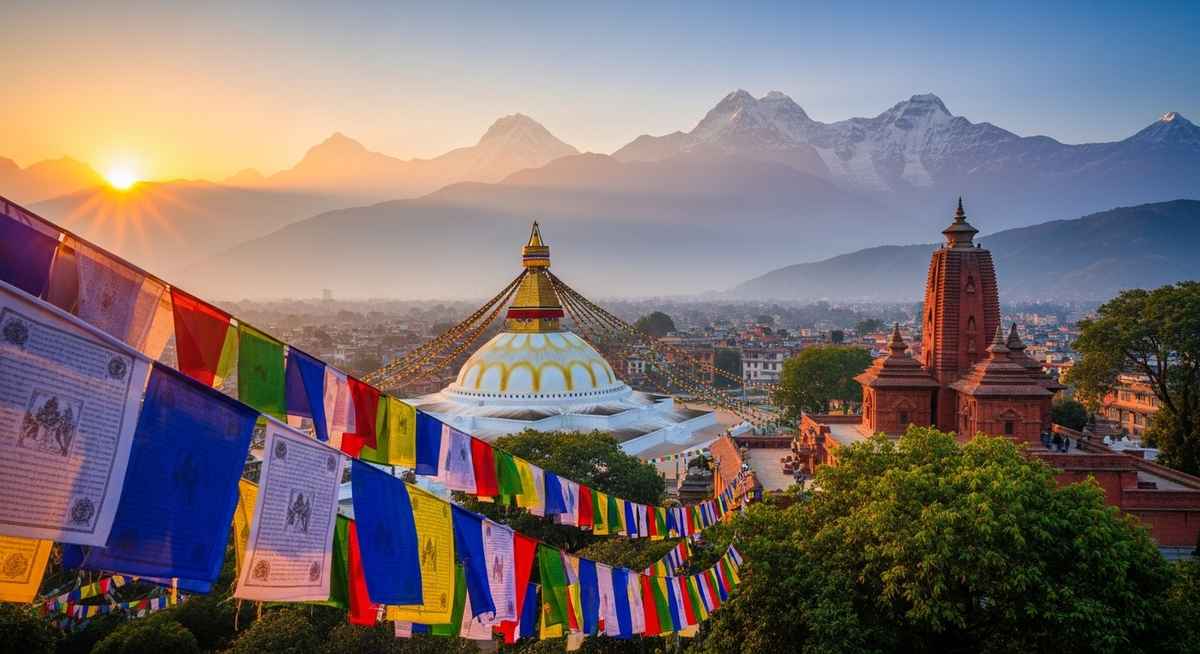
Boudhanath Stupa is a sacred Buddhist site in Kathmandu, Nepal, known for its massive dome, all-seeing eyes of Buddha, and vibrant prayer rituals.
It is a UNESCO World Heritage Site, deeply tied to Tibetan Buddhism, pilgrimage, and centuries of tradition.
The Boudhanath Stupa in Kathmandu, Nepal, is one of the most sacred sites for Buddhists and an important place in Tibetan culture.
Its symbolic architecture, large dome, and the eyes of Buddha represent wisdom, compassion, and the path to enlightenment.
Every day, pilgrims walk in kora or circumambulation, while monks engage in chanting and prayer, with colorful flags carrying mantra like Om Mani Padme Hum across the sky.
Built around 600AD by a Tibetan king, the Boudha stupa holds ancient relics and remains of the Buddhas.
Its mandala, semicircle design, and spherical form make it one of the largest stupas in the world. Recognized by UNESCO as a heritage landmark, it continues to be a place of pilgrimage, rituals, and tradition.
Life around the stupa is full of culture and energy. Alleys are lined with monasteries, shops, and vendors selling art, craft, and statue pieces.
Local foods like laphing, thukpa, alu roti, khapse, and Daal Bhat are popular among Nepalese and tourists, with places like Roadhouse Cafe, La Casita, Pho99, and ThasangThakali Kitchen adding to the experience.
Shopping here includes Cashmere at Tara Oriental, handmade clothes from Drichu, and beautiful Thangka paintings at a learning center.
Festivals like Losar, the Tibetan New Year, bring joy and color to Boudhanath. Visitors from Nepali, Newari, and international communities gather for the celebration, making it a truly awe-inspiring and peaceful place.
Surrounded by luxurious stays like Hyatt Regency, Hotel Tibet International, Ghangri Boutique Hotel, and Shambaling Boutique Hotel, the stupa remains a world landmark.
Over centuries, merchants from Tibet and India have stopped here with prayers while crossing the Bagmati River towards Lalitpur and Patan, keeping its tradition and Buddhism preserved.
5. Panauti – Traditional Newari town
Panauti is a beautiful Newari town in Nepal, located at the confluence of the Roshi and Pungamati rivers, about 32 kilometres from Kathmandu.
Known for its medieval architecture, hand-carved woodwork, and lively festivals like Panauti Jatra, it is a place rich in cultural heritage, temples, and communal spirit, recognized as a UNESCO tentative site since 1996.
Visitors experience peaceful lanes, traditional Daura and Dhaka attire, and warm smiles from the local community.
Walking through this historic settlement feels like stepping into a living museum. The cobbled lanes lead past timeworn buildings filled with intricate woodcarving and architectural features.
A Sadhu or holymen may be seen in Hindu prayer, their foreheads marked with paste and dreadlocks flowing freely.
The people wear traditional clothes such as Daura tunics, Dhaka caps, and Kurta Suruwals with trousers, blouse, and scarf.
The community homestay project makes it easy to stay close to local families, sharing their pride and communal spirit.
Everyday life moves gently, with women doing daily chores and neighbors exchanging smiles and salutations.
Without busy tour groups or noisy shops, the setting remains truly stunning and full of special charm.
6. Kirtipur – Ancient hilltop town
Kirtipur is one of the most treasured places in the Kathmandu Valley. This ancient Newari town sits proudly on a hilltop, giving scenic views of Nepal’s capital.
Its historic architecture, traditional events, and religious sites such as the Bagh Bhairab Temple create a unique cultural experience.
The cuisine here, made with old family recipes, is loved by visitors who want to taste real Newari flavors.
The origins of Kirtipur trace back to the oldest settlements in the valley, with ties to the Malla Kingdom and the rich history of the region.
Known as Kipoo or Kampu, this famed town carries stories of Newars, the proud natives who shaped its identity.
Walking along the stone-paved lanes, past houses and age-old temples, gives a true sense of stepping back in time.
Today, the Municipality is celebrated alongside places like Lalitpur, Bhaktapur, and Madhyapur Thimi, and since 2008 it has been on the UNESCO site list.
Established around the 12th century, it remains an independent spirit within the valley’s heart, a blend of living heritage and timeless beauty.
Pokhara & Annapurna Region
7. Pokhara – Phewa Lake, Davis Falls, Lakeside
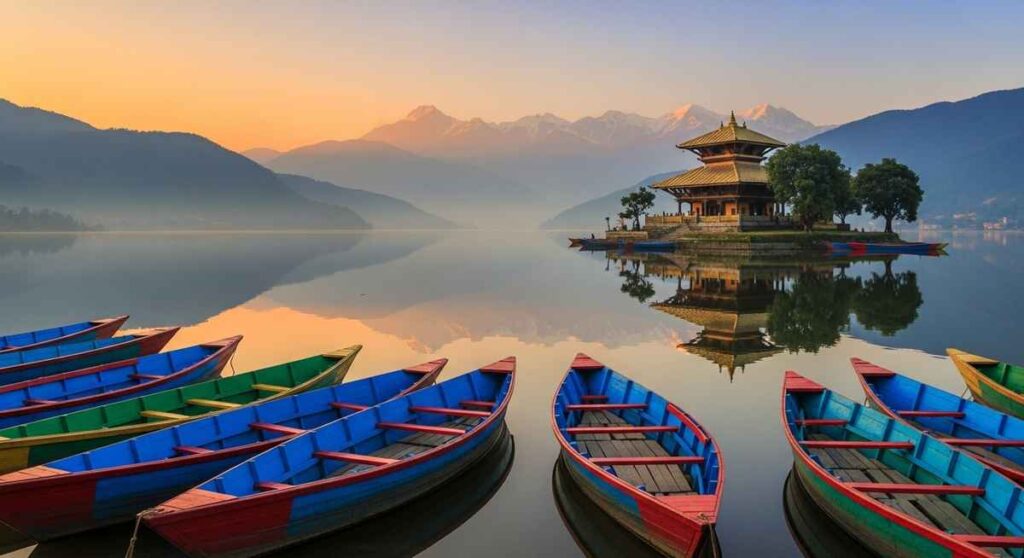
Pokhara – Phewa Lake, Davis Falls, Lakeside are the most famous attractions in Nepal’s Gandaki Province.
The serene Phewa Lake is perfect for boating and temple visits, Davis Falls is a unique waterfall flowing into an underground tunnel, and Lakeside is a lively tourist hub with hotels, shops, cafes, and outdoor adventures like paragliding and trekking.
When you visit Pokhara (पोखरा), you find a city full of beauty and energy. The serene Phewa Lake shines as one of the top attractions.
I once went boating there and enjoyed the calm surface of the freshwater. The Tal Barahi Temple sits on a small island, and the reflection of the Annapurna, Dhaulagiri, and Machhapuchhre peaks created a spectacular backdrop.
Many visitors come for this view, and the area is also known for its size, depth, and natural charm.
Not far away, Davis Falls, also called Patale Chhango, is another special place. The waterfall drops into a natural sinkhole and flows through a hidden tunnel.
I found it exciting to see how the water moves into the underground. Close by, the Gupteshwor Mahadev cave adds more adventure with its natural designs, and the dam from Phewa Lake feeds the flow.
The Lakeside is where the city feels the most vibrant. This hub has hotels, restaurants, pubs, cafes, shops, and many outdoor activities.
During my stay, I tried paragliding, trekking, and even kayaking. Others enjoyed relaxing by the water.
The atmosphere is always lively and charming, making it the heart of the tourist zone and a refreshing contrast to the busy center of the metropolitan city.
Beyond these highlights, Pokhara is called the “capital of tourism” in Nepal. Located in Gandaki Province, this valley is the gateway to the Himalayas. Snowy peaks like Manaslu rise high, and the Cluster of lakes—Rupa, Begnas, and Phewa—makes it a dream for a weekend getaway or a long holiday.
The land feels pristine, full of greenery and the glow of the Himalaya. From the altitude, the views are stunning, with an unobstructed line to the mountains.
Walking here, I also met locals—Gurungs, Magars, and Thakalis—who keep their traditions alive.
Many families have a proud history linked with the Gurkha soldiers, serving in the British Army, Nepalese Army, Indian Army, or even in UN peacekeeping.
The city, once part of the trade route to India and Tibet, still feels connected to the world.
From the outskirts with mule trains to the inspiration that has drawn many writers, Pokhara remains a jewel in the Himalaya, a place of pure natural disposition and timeless beauty.
8. Sarangkot – Sunrise & paragliding
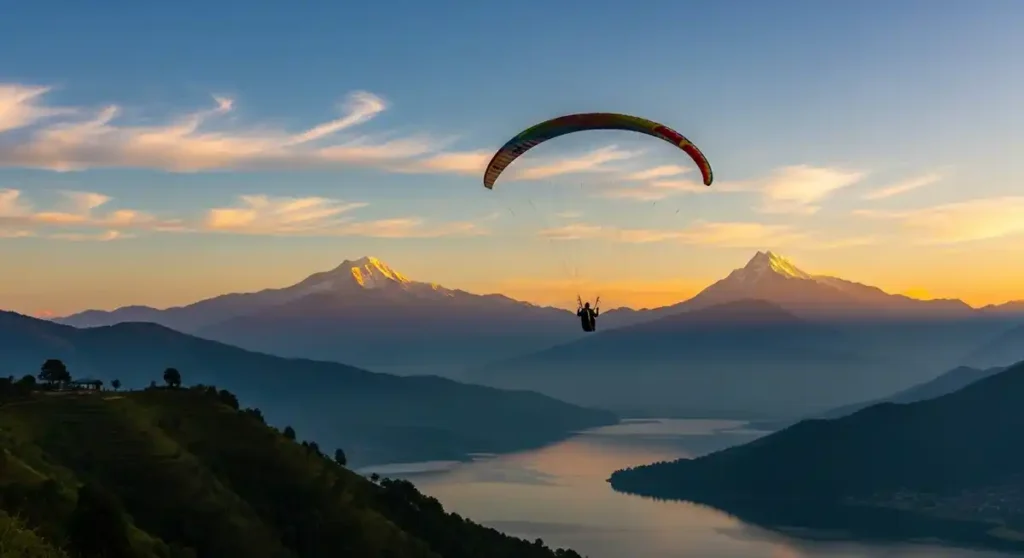
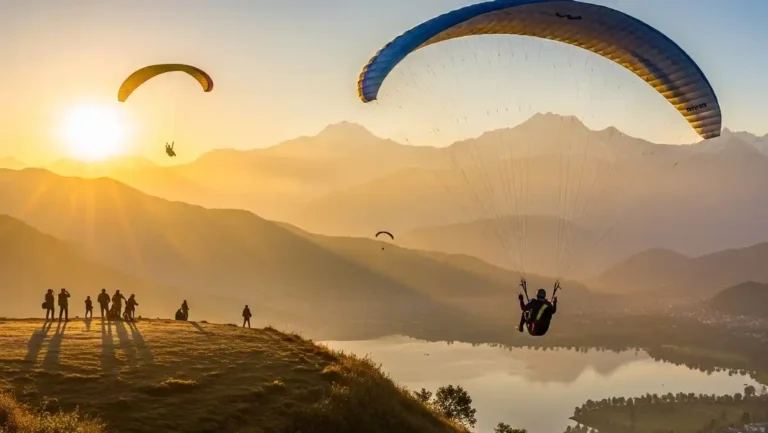
Sarangkot offers breathtaking Himalayan views and thrilling tandem flights.
From the glowing sunrise over Annapurna, Machhapuchhre, and Dhaulagiri to safe paragliding with certified professionals, visitors enjoy a perfect mix of natural beauty and adventure in Pokhara, Nepal.
The village of Sarangkot near Pokhara in Nepal is famous for its golden sunrise over the Himalayas.
Early morning light touches the mountain ranges like Annapurna, Machhapuchhre, and Dhaulagiri, creating a truly panoramic scene.
Many visitors choose a sunrise tour, often combined with a city trip or a stop at a cozy coffee shop.
For adventure seekers, paragliding here is a highlight. It is a top destination globally, known for smooth winds and great weather conditions.
Tandem flights with certified professionals provide a safe yet exciting way to enjoy the awe-inspiring scenery of Nepal.
Some packages even include photos and videos, making the experience unforgettable.
The hill of Sarangkot rises at an altitude of 1600m, offering sweeping views of Phewa Lake, Manaslu, and the city below.
Tourists climb to the tower or take a short hike from Pokhara Baglung highway at Miruwa, which takes about ninety minutes.
It has become one of the best paragliding locations in the world.
Travelers also enjoy other activities here, such as hiking, zip lining, and bird watching.
The vista of the Annapurna Himalaya feels almost mystical, with peaks stretching from Dhaulagiri to Lamjung in the east.
With its unique blend of sunrise tours and paragliding adventures, Sarangkot remains one of Nepal’s most loved tourist attractions.
9. Annapurna Base Camp (ABC)
Annapurna Base Camp (ABC) is a famous trekking destination in Nepal’s Annapurna region.
It offers stunning Himalayan views, rich landscapes of forests, rhododendrons, and terraced fields, along with unique Nepali culture in local villages.
The trek is popular in spring (March–May) and autumn (September–November) for clear skies and pleasant weather.
The journey to Annapurna Base Camp (ABC) is one of the most beautiful treks in the Annapurna region.
At over 4,130 meters (13,549 feet), the Sanctuary is surrounded by majestic Himalayan peaks, including Annapurna I, Machhapuchhre (Fishtail), Annapurna South, and Hiunchuli.
The views feel like a natural amphitheater, with breathtaking scenery at every step.
Along the trail, travelers pass through lush forests, blooming rhododendrons, charming villages, and green fields that turn into alpine meadows.
What makes this trek special is the mix of nature and culture. Trekkers enjoy the warm hospitality of the Nepali, especially the Gurung and Magar people, who share their traditions.
Days on the route are filled with adventure, while nights are spent in cozy mountain teahouses with simple meals.
The duration of the trek is usually 6–14 days, depending on the itinerary. Most begin the journey with a flight from Kathmandu to Pokhara, followed by a short bus ride to the starting point.
The best time to visit is during spring (March–May) or autumn (September–November). These seasons bring stable weather, clear skies, and vibrant landscapes.
Whether you are a first-time beginner or an experienced hiker, this trek is considered more accessible than other base camp routes, making it a memorable Himalayan adventure for all trekkers.
10. Poon Hill / Ghorepani
Poon Hil is a famous trekking route in Nepal’s Annapurna region, known for its sunrise views, Himalayan peaks like Annapurna and Dhaulagiri, and the warm culture of Gurung and Magar communities.
The trek passes through forests, villages, and terraced fields, making it an ideal short adventure for beginners and nature lovers.
Poon Hill (पून हिल, Pun Hill, हिल) is a scenic hill station in Nepal.
From this viewpoint in the Ghorepani village, visitors see the Annapurna Massif range, the Dhaulagiri mountain range, and peaks such as Annapurna 8,091m, Dhaulagiri 8,127, Annapurna South 7,219 Meter, Machhapuchhare 6,993 Meter, Hinchuli, Dhampus peak, Annapurna III, and Dhulagiri II.
At an elevation of 3210m/10531 ft, it offers a panoramic sunrise over the Himalayas that is the main highlight of the trek.
The route begins from Pokhara, about 270 kilometres west of Kathmandu, the capital city of Nepal.
Trekkers follow trails through rhododendron forests, terraced fields, and small villages like Birethanti, Shikha, Dana, and Chitre.
Many choose to stay in guest houses and enjoy local tea, lodging, and meals in the evening.
Some routes start from Ulleri with a short 3-hour hike, while others take 10 hours from the South-East or North-West through Tatopani. Each path brings natural scenery and beautiful surroundings.
To enter the Annapurna Conservation Area (ACAP), visitors need an ACCAP Permit or national park permit along with a TIMS card.
The duration of this trek is short, about 3–5 days, and it is considered ideal for beginners.
In autumn and spring seasons, the conditions are especially clear for the best views.
The trail also connects to the Annapurna Base Camp and passes the centre of the Sanctuary.
Ghorepani village has a unique history. The name comes from Nepali words “pani” (water) and “ghora” (horses).
Traders once stopped here for water, giving rise to its nomenclature. Today, the route thrives on tourism, with trekking as the main income source.
Meeting the Gurung and Magar communities provides a true cultural immersion, with their welcome, rich culture, and way of life.
After a day of adventure, many visitors also enjoy the natural hot springs at Jhinu Danda for a chance to relax.
11. Mardi Himal Trek
The Mardi Himal Trek in Nepal’s Annapurna region is a short and scenic Himalayan adventure.
It takes about 5–7 days from Pokhara and leads to the Mardi Himal Base Camp at 4,500 meters.
Trekkers enjoy spectacular views of Annapurna, Machhapuchhre (Fishtail Mountain), and Dhaulagiri, along with lush rhododendron and bamboo forests, picturesque villages, and peaceful trails. A TIMS card, ACAP permit, and a guide are required.
The Mardi Himal Trek is one of the most scenic adventures in the Himalayan Annapurna region of Nepal.
The trail offers spectacular views of Machhapuchhre, also called Fishtail Mountain, as well as Annapurna and Dhaulagiri.
This trek is shorter than many other popular Annapurna treks and is known for its picturesque villages, rhododendron forests, and peaceful, secluded experience.
From Pokhara, the journey usually takes 5 to 7 days, with the final Base Camp at about 4,500 meters.
Trekkers are rewarded with panoramic scenery of the massif and clear viewpoints that make the walk truly special.
Both beginners and those with more trekking experience find this moderate difficulty route enjoyable.
For entry, a TIMS card, an ACAP Permit, and a guide are mandatory as part of the Annapurna Conservation Area requirements.
These measures ensure safety and help preserve the natural beauty of the trail.
With flexible itineraries, trekkers can enjoy a short duration trek or extend the route by combining it with Poon Hill, Khopra Ridge, or the Annapurna Base Camp Trek.
Each option brings enriching experiences, from lush bamboo and oak forests to alpine meadows and breathtaking mountain views.
The Mardi Himal Trek is suitable for families, beginners, and experienced trekkers alike.
The well-maintained trails, gentle ascents, and diverse landscapes create a harmonious adventure filled with natural splendor.
It remains one of the best short treks in Nepal, combining adventure with comfort, and offering unforgettable memories of the Himal.
Everest & Solukhumbu Region
12. Everest Base Camp (EBC)
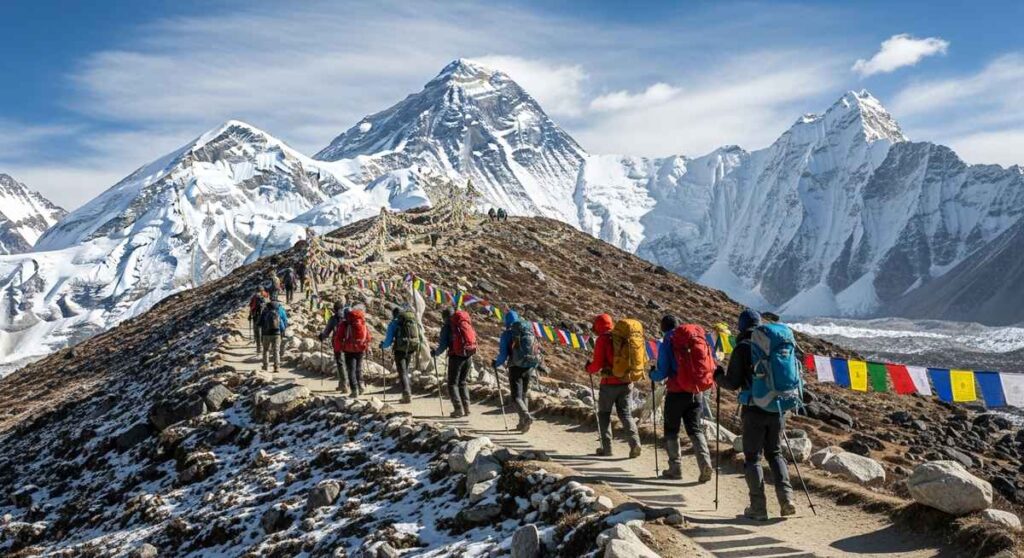
The Everest Base Camp (EBC) is one of the most loved trekking destinations in the Himalayas.
At an altitude of 5,364 meters (17,598 ft), it serves as the starting point for exciting expeditions to climb Mount Everest.
From the first step at the airstrip in Lukla, also called the Gateway to Everest, the journey through the Khumbu Valley feels like walking into a living adventure.
Along the trail, travelers discover warm Sherpa villages such as Phakding, Monjo, and the lively Namche Bazaar.
Passing the check point in Jorsale to enter the Sagarmatha National Park, the path follows the Dudh Koshi River, crossing a high suspension bridge before climbing toward the mountains.
Every turn reveals magical views of the surrounding peaks and mountains, creating moments that stay in memory forever.
As the route continues, stops at Syangboche, Thame, Khumjung, and Khunde help with acclimatization while offering chances to enjoy local culture.
The valley of the Imja Khola brings panoramic sights of Thamserku, Kangtega, Ama Dablam, and Lhotse, while Tengboche Monastery sits in one of the most stunning backdrops in the Himalaya.
From Pangboche, Pheriche, and Dingboche, the path stretches to Chhukung, then rises to Lobuche near the Khumbu glacier.
At Gorak Shep, small tea houses provide cozy shelter before the last trek across the glacier to the Base Camp.
The highlight for many is climbing up to Kala Patthar, a famous viewpoint for the best image of the mountain.
Standing here, with pure awe, travelers feel the heart of the Himalayas—whether coming through the South Base Camp in Nepal with porters, animals, and strong yaks, or the North Base Camp in Tibet, reached by paved road via China National Highway 318.
Every moment on this two-week trek is filled with beauty, history, and unforgettable experience.
13. Lukla – Gateway to Everest treks
Lukla is a small mountain town in Nepal with the famous Tenzing-Hillary Airport, serving as the main starting point for the Everest Base Camp and other Himalayan adventures.
At 2,860 meters, it offers direct access to the Khumbu region, with teahouses, guides, and gear shops that support trekkers before they head into the Himalayas.
Located in the Khumbu region of eastern Nepal, Lukla is known worldwide as the Gateway to the Everest Base Camp and popular trekking routes like the Three Passes trek.
At an altitude of 2,860 meters above sea level, the town provides a natural launchpad for high-altitude journeys.
Many trekkers and climbers begin their adventure here, arriving by plane at the famous Tenzing-Hillary Airport, which is celebrated as an aviation marvel.
The airport is more than a landing point; it is also a vital logistical link, transporting goods, food, fuel, medicine, and other supplies to remote mountain communities. This makes it a true lifeline for the region.
Walking through the vibrant mountain town, visitors find warm teahouses, well-stocked gear shops, and friendly guides with their porters ready to provide support.
There are hotels, cafes, and even a bakery where travelers can spend quality time before setting off on their treks.
The Sherpa community welcomes visitors with rich culture, breathtaking scenery, and a unique lifestyle rooted in the Himalayas.
For many, reaching Lukla feels like a memorable rite of passage, a thrilling starting point that blends cultural experiences with the promise of exploring Mount Everest and the wider Himalayan world.
It is a critical hub and a hotspot during peak seasons, making it one of the most exciting places to begin an unforgettable trekking adventure.
14. Tengboche Monastery
Tengboche Monastery is the largest Tibetan Buddhist monastery in the Khumbu region of Nepal, located at 3,867 metres (12,687 ft).
Surrounded by the Himalayan Mountains like Everest, Ama Dablam, and Lhotse, it is a spiritual center for the Sherpa community, famous for its Mani Rimdu festival and as a stop on the Everest Base Camp Trek.
High in the Khumbu valley of eastern Nepal, the beautiful Tengboche Monastery stands among the Sherpa community.
Also known as Thyangboche Monastery and Dawa Choling Gompa, it shines as the largest gompa in the area.
At 3,867 metres (12,687 ft), the setting is peaceful, with the Himalayan Mountains such as Ama Dablam, Everest, Nuptse, Lhotse, Thamserku, and Tawache creating a breathtaking view.
Built by Lama Gulu with close ties to the Rongbuk Monastery in Tibet, this Tibetan Buddhist monastery has been carefully rebuilt over time with the help of volunteers and international assistance.
Today it stands strong, surrounded by pines, bright azaleas, and colorful rhododendrons, making it an attractive gompa and a serene place to visit.
The monastery rests inside Sagarmatha National Park, a UNESCO World Heritage Site of outstanding universal value.
Visitors often follow the Sacred Sites Trail Project, a clockwise direction circuit of 10 monasteries that ends here.
Reaching the site usually begins in Kathmandu, with a flight to Lukla airport and a trek through Namche Bazaar, passing the Dudh Koshi and Imja Khola rivers.
Many trekkers enjoy a night halt in the area, staying at local rest houses, lodges, or scenic camping sites along the trek route to the Everest region.
Each year in October, the monastery becomes the heart of joy during the Mani Rimdu festival.
Here, the Rinpoche blesses pilgrims, travelers, and mountaineers who gather for Buddhist celebrations, songs, ritual dances, and stories of legendary figures.
Visitors can join afternoon tours, experience the lively festivities, and feel the warm welcome of the local culture.
From Tengboche, many continue towards Pheriche, Kala Pattar, or Gorakshep, enjoying close views of Everest while carefully taking time to acclimatize on their trekking or mountaineering journey.
15. Kala Patthar – Everest viewpoint
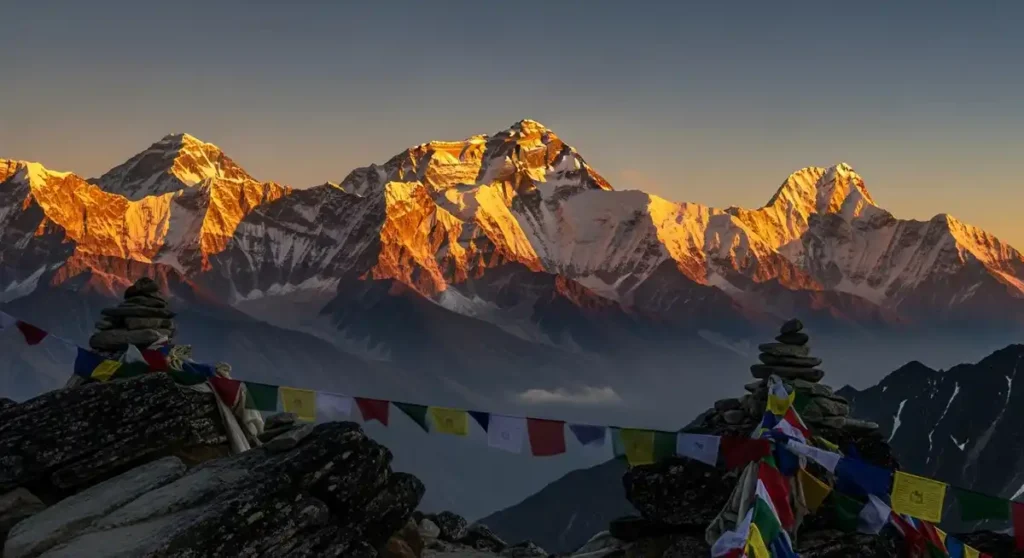
At the altitude of 5,644 meters (18,519 feet), Kala Patthar stands as a renowned landmark in the Everest region of Nepal.
Known as Black Rock in Nepali, this rocky ridge offers an unobstructed viewpoint of the Everest massif.
The appearance of the mountain peaks, bathed in golden hues at sunrise or sunset, makes the place truly magical.
Many trekkers include this highlight as part of their EBC treks.
From Gorak Shep, a short, steep hike leads to the vantage point, where the superior panoramas reveal Mount Everest, Lhotse, Nuptse, and Pumori.
The close-up views are both accessible and stunning, making it one of the most famous View Points in the Sagarmatha National Park.
The geographical location is just above the Khumbu glacier and near the Everest Base Camp, about a few kilometers away.
Its prominence may be small compared to a proper mountain, but the structure allows for a superior, breathtaking perspective.
Helicopter tours often combine a stop here, giving visitors the same experience without the climb.
The best time to visit is in spring (March–May) or autumn (September–November), when the skies are clear and the weather conditions are most favorable.
With its notable history, fitted webcam, and important role in the Everest trek, Kala Patthar is a true destination for every trekker who wishes to see the Himalayan giant from its most mesmerizing viewpoint.
Cultural & Spiritual Destinations
16. Lumbini – Birthplace of Buddha
Lumbini is a beautiful Buddhist pilgrimage site in the Lumbini Province of Nepal.
This peaceful place is the birthplace of Lord Buddha, also called Siddhartha Gautama, who was born in 623 B.C..
The green gardens where his mother, Maya Devi, gave birth are still a central feature, and they attract many pilgrims from around the world.
The history of this site is remarkable. The Indian emperor Ashoka visited Lumbini and placed the Ashoka Pillar with inscriptions as a commemorative sign of respect.
Nearby, the Mayadevi Temple is the most sacred spot, where archaeologists have identified the exact place of the birth.
The Holy Pond Puskarini is where Maya Devi took a ritual bath before the birth, and tradition says that the Buddha had his first bath there too.
Lumbini is filled with temples, monuments, monasteries, stupas, and even a museum.
The Lumbini International Research Institute supports the study of Buddhism, while visitors come here to meditate and learn.
Pilgrims from many countries, such as Vietnam and France, have built new temples, making Lumbini a vibrant international spiritual site.
The sacredness of Lumbini is also linked to the story of the Sal grove in the Lumbini Garden, where the baby Prince Siddhartha took his first seven steps and shared a peace message for humanity.
On Baishakha Purnima, the full moon day of May, his mother, the Queen of Kapilvastu and wife of Shakya King Suddhodhana, gave birth after bathing in the Sacred Pond Pushkarini.
Recognised by UNESCO as a World Heritage Site in 1997, Lumbini remains a pivotal destination for Buddhist pilgrims seeking ultimate Enlightenment.
17. Janakpur – Janaki Mandir, Mithila culture
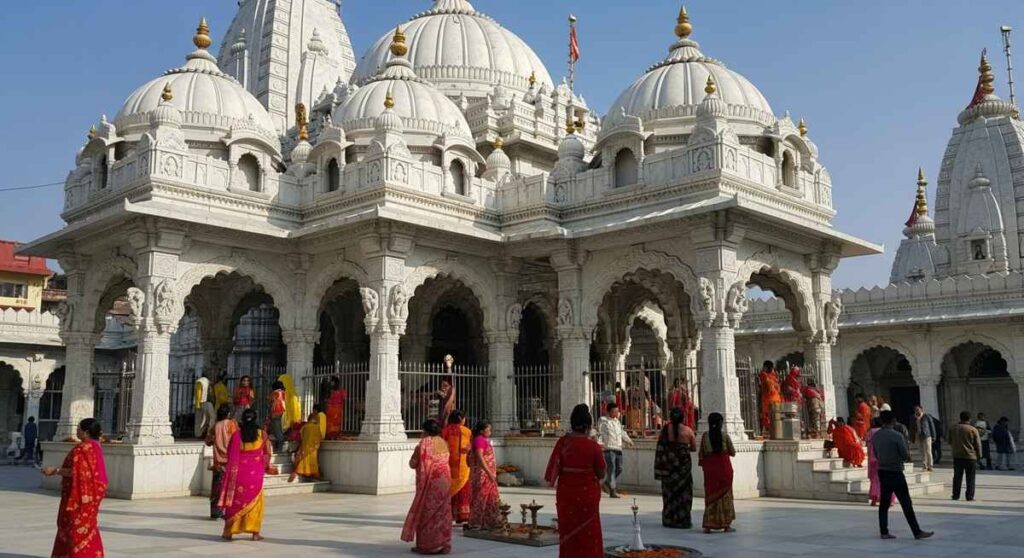
Janakpur is a sacred place in Nepal, known as the birthplace of Goddess Sita and home to the grand Janaki Temple.
It reflects Hindu faith, artistic brilliance, and the rich Mithila culture through its history, festivals, art, and traditions.
The beautiful Janaki Temple in Janakpur, Nepal, is one of the most famous Hindu temples.
Made of shining white marble, it blends Hindu-Rajput architecture with touches of Mughal and Koiri influences.
Built in 1911 AD, the temple is also called the Nau Lakha Mandir, as its cost was nine lakhs.
Every year, countless Hindu devotees visit this pilgrimage site to honor Goddess Sita and Lord Rama.
The temple holds deep Significance. It is believed to be the birthplace of Sita, the daughter of King Janak and the consort of Lord Rama.
Walking inside, visitors feel its religious and cultural importance.
It is not just a monument, but a place where faith, ancient tales, and Hindu mythology come alive.
The legendary origins and architectural splendour add to its charm, making Janakpurdham a timeless sacred abode.
The heart of Mithila culture can be seen here. Once part of the ancient Mithila kingdom, this land was a center of learning, religion, and culture during the Vedic period.
Today, Mithila art shines with intricate patterns, distinctive art, and vibrant colors. From artwork to art forms, every piece reflects a rich cultural tapestry.
For a cultural traveller, exploring a Janakpur Cultural Tour is an unforgettable experience and true cultural immersion.
Life in Janakpur is filled with joy through its festivals. Every vibrant festival and lively celebration highlights the local traditions of the region.
The diversity of ethnic groups adds to the beauty of its cultural importance.
Visitors—whether a pilgrim seeking divine blessings, a history enthusiast drawn to ancient tales, or a cultural traveller—find spirituality, history, and traditions blending into one living story of Mithila Culture.
18. Muktinath – Sacred Hindu-Buddhist pilgrimage
Muktinath is a sacred pilgrimage site located in the Mustang region of Nepal.
It is revered by both Hindus and Buddhists for its spiritual energy and breathtaking Himalayan views.
Visitors come to seek liberation, worship Lord Vishnu at Mukti Chhetra, and honor Avalokiteshvara, the Bodhisattva of Compassion.
The site features 108 water spouts flowing from a glacier where pilgrims perform cleansing rituals and the eternal blue flame at Jwala Mai Temple, marking its spiritual significance.
The temple is part of Divya Desams in Hinduism and one of the eight Svayam Vyakta Ksetras of Vaishnavism, as well as one of 51 Shakta pithas.
Other sacred areas nearby include Pashupat Kshetra, Ruru Kshetra, and Baraha Kshetra.
Tibetan Buddhists call the site Chumig Gyatsa, meaning Hundred Waters, and honor the murti, a manifestation that embodies all Buddhas.
Muktinath also represents religious harmony, where Hindus and Buddhists have historically visited together, mutually respecting and including each other.
The region combines spiritual rituals, Tantric traditions, and natural beauty at an altitude of 3,800 meters, making it one of the most important sacred sites in Nepal.
Dakinis or Sky Dancers and 24 Tantric places add to its unique cultural and spiritual charm.
Wildlife & Nature
19. Chitwan National Park – Rhino & jungle safaris
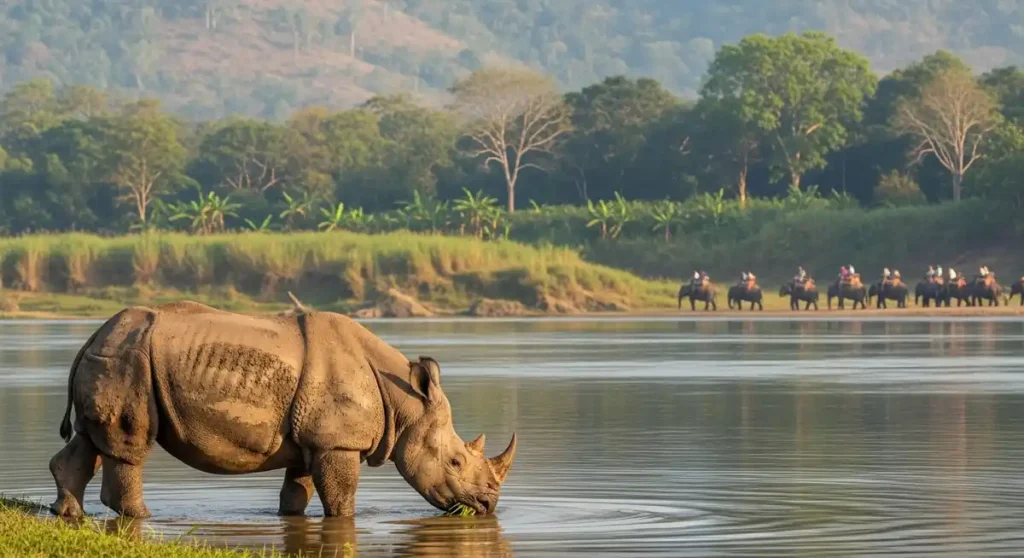
Chitwan National Park offers an unforgettable adventure in Nepal’s lush Terai lowlands.
Visitors can see one-horned rhinos, tigers, deer, monkeys, and over 600 bird species.
Safaris include Jeep tours, canoeing, elephant rides, and guided jungle walks.
You can also explore Tharu villages, enjoy cultural music and dance, and experience the rich local community life.
The park is a UNESCO World Heritage Site with thriving wildlife, scenic rivers, and lush vegetation, making every visit extraordinary.
Chitwan National Park – Rhino & jungle safaris are a perfect way to experience Nepal’s natural beauty.
Located in the subtropical lowlands of the Inner Terai, the park is home to one-horned rhinos, Royal Bengal tigers, deer, monkeys, gharials, and over 600 bird species.
The lush vegetation, rivers, and floodplains create ideal habitats for these incredible wildlife.
Safaris in the park are varied and exciting. You can take a Jeep tour deep into the forest, go canoeing along the Rapti River, enjoy guided jungle walks, or ride on elephants.
Each option offers an immersive way to observe, spot, and appreciate the large mammals and vibrant ecosystem.
Beyond wildlife, the park offers rich cultural experiences. Visitors can explore Tharu villages, attend traditional music and dance performances, and learn about the local way of life.
The community works closely with park authorities to protect wildlife and maintain the natural beauty of the area.
Historically, the park was established in 1973 and is a UNESCO World Heritage Site.
The Rhino Sanctuary, scenic lakes, and Siwalik foothills add to its significance. Protected areas, buffer zones, and sustainable tourism make it a perfect destination for nature lovers and tourists seeking adventure.
Every visit to Chitwan National Park is filled with unforgettable sights.
Watching rhinos, tigers, and birds, floating along rivers, and walking in the jungle creates a truly extraordinary and peaceful experience.
20. Bardiya National Park – Tiger sightings, remote safaris
Bardiya National Park in Nepal is a top destination for tiger sightings and remote safaris.
Visitors can explore dense forests, grasslands, and riverine habitats on jeep, walk, or boat safaris.
The park is home to Royal Bengal tigers, elephants, rhinoceros, and over 30 mammal species.
Canoeing on the Karnali and Babai rivers offers chances to see gharials, mugger crocodiles, and Gangetic dolphins.
Accommodation is available in jungle lodges, and entrance fees are affordable. The best months for sightings are March to May and October to December.
Bardiya National Park is one of Nepal’s largest and most undisturbed national parks.
The park spans 968 sq.km of the lowland Terai, offering a mix of sal, savannah, marsh, and deciduous forests.
Its rich ecosystems support a thriving population of Royal Bengal tigers, elephants, rhinoceros, swamp deer, and black buck.
Over 230 bird species such as the Bengal florican, lesser florican, silver-eared mesia, and sarus crane can also be spotted.
Visitors can enjoy remote safaris in multiple ways. Jeep safaris cover large areas, while walking safaris allow an immersive experience.
Canoeing along the Karnali and Babai rivers lets travelers observe gharials, mugger crocodiles, and the Gangetic dolphin in their natural habitats.
Guides help explore trails and zones, ensuring a safe and authentic experience while spotting tigers and other wildlife.
The park provides convenient access from Kathmandu and Nepalgunj. Accommodation options include jungle lodges close to safari zones, allowing early morning and late afternoon sightings.
Patience and perseverance during these activities reward visitors with unforgettable encounters.
The park is carefully managed by local communities and authorities to maintain its protected status and natural resources.
Visiting Bardiya National Park is a majestic experience. The hot, dry months from March to May and October to December are ideal for tiger sightings.
The park offers an adventurous, tranquil, and immersive journey into Nepal’s wildlife and raw natural beauty.
21. Koshi Tappu Wildlife Reserve – Birdwatching paradise
Koshi Tappu Wildlife Reserve in eastern Nepal is a birdwatching paradise.
It is home to over 500 bird species, including migratory and resident birds, and provides a safe haven for wild water buffaloes (Arna).
Visitors can enjoy boating, elephant safaris, and spotting Gangetic dolphins while exploring lush wetlands, marshes, and grasslands.
Koshi Tappu Wildlife Reserve is an important wetland site in eastern Nepal, well-known for its rich biodiversity.
The reserve spreads across Sunsari, Saptari, and Udayapur districts and features extensive marshes, pools, and tall grasslands.
These habitats support over 500 bird species, making it one of the top destinations for birdwatchers.
Visitors can explore permanent and seasonal reed beds, oxbow lakes, and riverine forests, which create ideal habitats for rare and migratory birds like Pallas’s Fish Eagle, Greater Adjutant Stork, Indian Skimmer, and White-tailed Eagle.
In winter, birds from China, Mongolia, and Siberia visit the reserve, adding to its unique avian diversity.
The reserve is also a safe haven for Nepal’s wild water buffaloes (Arna).
Other wildlife, including smooth-coated otters and Gangetic dolphins, can be seen nearby, making the area a thriving ecosystem.
Visitors can stay at Koshi Tappu Wildlife Camp, the first luxury camp in the reserve.
It provides modern safari tents, guided tours by naturalists, and facilities like a restaurant with Nepalese and international cuisine.
Activities such as boating, birdwatching tours, and elephant safaris allow guests to experience the reserve’s natural beauty up close.
The reserve’s location along the Sapta-Koshi River and its protected Ramsar-listed status ensure that the wetlands remain vibrant and healthy.
This makes it a perfect destination for nature lovers and bird enthusiasts looking for peace, adventure, and amazing wildlife sightings.
Remote & Scenic Regions
22. Mustang / Upper Mustang
Upper Mustang is a beautiful region in Nepal known for its stunning landscapes, unique culture, and ancient Tibetan heritage.
Trekking here offers a once-in-a-lifetime adventure through barren terrains, rocky trails, and views of Himalayan peaks like Nilgiri, Annapurna, and Dhaulagiri.
Visitors can explore the historic Kingdom of Lo, meet mountain people, and enjoy the culturally preserved regions of Mustang District.
Upper Mustang is a remarkable part of Mustang District in Gandaki Province, Nepal.
It was once the Kingdom of Lo and is known for its rich Tibetan culture, Thakali communities, and traditional Tibetic languages.
The northern areas include Lo Manthang, Lo-Ghekar Damodarkunda, and Varagung Muktichhetra, while the southern third is lower Mustang, home to the Thakali people.
The region is perfect for trekking, offering a 17-day journey filled with breathtaking landscapes, tree-less terrains, and rocky trails.
Visitors can enjoy a scenic flight from Pokhara to Jomsom, explore UNESCO World Heritage Sites in Kathmandu, and witness the unique culture of the Last Forbidden Kingdom.
Travelers experience the mountain people’s lifestyle, animal husbandry, and trade.
Upper Mustang is known for its culturally preserved regions, extraordinary adventure, and the Tibetan plateau scenery.
The region continues to attract visitors seeking once-in-a-lifetime opportunities, stunning views, and the magic of remote trans-Himalayan landscapes.
23. Bandipur – Heritage town with mountain views
Bandipur is a heritage town in the mountains of Nepal with stunning panoramic views of the Himalayas.
It is a well-preserved Newari town with pagoda-style roofs, wooden carvings, and traditional architecture.
Visitors can enjoy hiking, exploring Siddha Gufa cave, and experiencing local culture, festivals, and vibrant communities.
The town offers temples, shrines, scenic trails, and breathtaking vistas, making it a perfect destination for culture and nature lovers.
Bandipur is a historic Newari town nestled in the foothills of the Himalayas.
The mountain views are incredible, offering panoramic vistas that attract travelers from around the world.
The architecture reflects a rich cultural heritage with pagoda-style roofs, ornate wooden carvings, and intricate latticework, creating a unique aesthetic throughout the town.
Visitors can immerse themselves in the local culture by exploring temples, shrines, and sacred caves, such as Siddha Gufa, and experiencing traditional festivals.
The town is vibrant and home to ethnic communities, preserving age-old traditions while providing modern accommodations like homestays, inns, and hotels.
Outdoor activities include hiking trails through forests, hills, and tribal villages.
Landmarks like Tundikhel and Thani Mai Temple offer 360-degree views of the Annapurna range and surrounding verdant hills.
The town is accessible by bus from Pokhara, making it a pleasant stop for travelers exploring Nepal’s natural and cultural heritage.
Bandipur blends charming old-world appeal with quintessential Nepalese culture, making it a perfect destination for those seeking heritage, adventure, and stunning mountain scenery.
24. Rara Lake – Remote alpine lake
Rara Lake in northwestern Nepal is the country’s largest and most beautiful alpine freshwater lake, located within Rara National Park in the Mugu district.
Known for its turquoise waters, snow-capped peaks, and rich wildlife, it offers peaceful trekking, boating, and nature exploration in a truly serene and pristine setting.
Hidden in the Mugu district of northwestern Nepal, Rara Lake rests like a gem in the heart of Rara National Park.
This alpine lake sits at high altitude, surrounded by green hills, juniper, and pine forests.
The air is crisp, the landscape breathtaking, and the crystal-clear water shines under the open sky.
The turquoise waters of this freshwater lake reflect the snow-capped peaks, creating a perfect mirror-like effect.
Visitors can enjoy boating, gentle hiking, or peaceful trekking along the forested hillsides.
The view from Chuchemara Hill, a well-known vantage point, reveals the full beauty of the deep blue lake and its sparkling waters.
Around the lake, the ecosystem thrives with diverse flora and fauna.
You can see flowers, butterflies, and birds in bright colors.
In the forests, live red panda, musk deer, Himalayan tahr, Himalayan black bear, leopard, and many other mammals.
During winter, the park becomes home to coots, great-crested grebe, black-necked grebe, mallard, gulls, and other migrant water fowl.
The local communities add warmth to the experience. Their traditional lifestyles and deep respect for nature bring a touch of cultural immersion to every visit.
Spending time near the camp by the lake, listening to the soft sound of trout swimming in the Mugu Karnali via Nijar Khola, makes Rara feel truly alive — a place where nature and peace meet perfectly.
25. Shey Phoksundo National Park (Dolpo)
Shey Phoksundo National Park is Nepal’s largest and most beautiful trans-Himalayan national park, known for its turquoise Phoksundo Lake, rich biodiversity, ancient monasteries, and stunning mountain scenery.
It is a peaceful natural treasure that protects rare wildlife and showcases the vibrant culture of the Dolpo region.
Hidden deep in the Himalayas, Shey Phoksundo National Park in Dolpo, Nepal, is a land of calm beauty and wonder.
Spread across the Mid-Western Region, this Trans-Himalayan National Park was established in 1984 to preserve the area’s rich ecosystem, unique flora, and fauna.
The park’s altitude ranges from 2,130 m to 6,885 m, creating a home for countless biotic systems and adding to its incredible biodiversity.
In the heart of the park lies the stunning Phoksundo Lake, famous for its turquoise color and peaceful setting.
The lake rests near Suligad at 3,612 m (11,850 ft) and is surrounded by mountains, glaciers, and a tall waterfall—one of Nepal’s highest.
The Khung, Nmajung, Jugdual, Panjang, and Thuli Bheri rivers flow through this landscape, making it even more scenic and spectacular.
The nearby Ringmo village is a Tibetan settlement that adds cultural richness to the natural charm of the park.
Ancient Gompas like Shey Gompa and Thashung Gompa, built centuries ago, stand as symbols of faith, heritage, and conservation.
The park’s buffer zone, declared in 1998, includes forests, private lands, and is jointly managed by local communities to preserve natural resources and promote community development.
Shey Phoksundo National Park reflects the spirit of the Himalayas—a perfect harmony of nature, culture, and wildlife.
Its spectacular landscapes, clear rivers, and rich heritage make it one of the most magnificent national parks in the world.
Conclusion
Nepal is a land where nature, culture, and spirituality blend into one unforgettable journey.
Each place—from the bustling lanes of Kathmandu to the peaceful valleys of Pokhara—tells a unique story.
The mighty Himalayas stand as timeless guardians, while heritage towns like Bhaktapur and Patan whisper the secrets of centuries.
Adventure seekers find endless trails to explore, and spiritual travelers find calm in sacred temples and monasteries.
Wildlife lovers, too, discover Nepal’s wild side in Chitwan and Bardiya. Wherever you go, the people’s warmth and kindness make you feel at home.
Whether it’s your first visit or your fifth, Nepal always offers something new—something deeply moving. So pack your spirit of adventure and let Nepal leave its mark on your heart.
FAQs About Visiting Nepal
Which is the most visited place in Nepal?
Kathmandu is the most visited place in Nepal. It is the capital city and the heart of culture, history, and religion. Visitors explore temples like Pashupatinath, Swayambhunath, and the lively streets of Thamel. The Durbar Square, a UNESCO World Heritage Site, shows ancient art, royal palaces, and vibrant traditions that make Kathmandu unforgettable.
Which is the most beautiful place in Nepal?
Pokhara is the most beautiful place in Nepal. It sits by calm Phewa Lake, surrounded by the Himalayas. The view of Annapurna and Machhapuchhre peaks looks magical. Visitors enjoy boating, waterfalls, caves, and peaceful walks near Lakeside. With clear skies and stunning sunsets, Pokhara feels like heaven on earth.
Is 7 days enough for Nepal?
Yes, 7 days are enough to enjoy a short and exciting trip to Nepal. You can explore Kathmandu’s temples, visit Pokhara for its lakes and mountain views, and take a short trek like Poon Hill or Mardi Himal. Each day brings new sights, food, and warm people, making the week feel full and special.
Can girls wear shorts in Nepal?
Yes, girls can wear shorts in Nepal, especially in cities like Kathmandu and Pokhara. The people are friendly and used to tourists. However, when visiting temples or villages, it’s better to wear modest clothes like long skirts or pants out of respect for local customs.
What is the best time to visit Nepal?
The best time to visit Nepal is in spring (March to May) and autumn (September to November). The weather is clear, warm, and perfect for trekking and sightseeing. During these months, the skies stay bright, flowers bloom, and mountain views look their best.
Do I need a guide to trek in Nepal?
Yes, a guide is needed for most treks in Nepal. Guides help with directions, local culture, and safety. They make the journey easier and more fun. Some areas, like the Annapurna or Everest region, also require a licensed guide and permits for trekking.
How much does a Nepal trip cost?
A Nepal trip can cost between $500 to $1500 for a week, depending on travel style. Budget travelers can stay in guesthouses and eat local food. Mid-range travelers enjoy comfortable hotels, guided tours, and transport. Trekking packages may add some cost, but the experience is worth it.
Is Nepal safe for solo travelers?
Yes, Nepal is safe for solo travelers. The people are kind, helpful, and welcoming. The streets are friendly, and travelers often meet others on treks or in cafes. It’s always good to keep your belongings safe and follow local advice while exploring.
What should I pack for Nepal?
Pack light and smart for Nepal. Bring comfortable clothes, trekking shoes, a warm jacket, sunscreen, and a hat. Add a raincoat for mountain weather, a reusable water bottle, and personal items. For trekking, pack layers and basic medicines for a safe and cozy trip.
Which festivals should I attend in Nepal?
Dashain and Tihar are two of Nepal’s biggest festivals filled with joy, lights, and family gatherings. Buddha Jayanti in Lumbini and Losar in Boudhanath bring peace and color. Holi, the festival of colors, fills the streets with fun and music. Each festival shows Nepal’s rich culture and unity.
Which month is best for a Nepal trip?
October is the best month for a Nepal trip. The weather is clear and cool, perfect for trekking and sightseeing. The mountains look bright, and many festivals take place this month. It’s a joyful time to explore Nepal’s beauty and culture.
Is a visa required for Nepal?
Yes, most travelers need a visa to enter Nepal. You can get it on arrival at the airport or apply online. The process is simple and quick. Always carry your passport, photos, and some cash in U.S. dollars for the visa fee.
Disclaimer
The content provided by TravelDrizzle.com is for informational and travel inspiration purposes only. Always verify details like permits, weather, and travel guidelines before visiting Nepal.